| Bishop
College Historically Black College
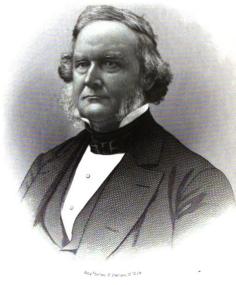
167 - 171 HON. NATHAN BISHOP, LL.D. Seldom, if ever, in the history of the American Baptist Home Mission Society has | it sustained a greater loss than in the death of I Hon. Nathan Bishop, LL.D., who passed ! away peacefully on the morning of Aug. jth, 1880, in Saratoga Springs, at the summer residence of his son-in-law, Prof. Norman Fox. The disease which obscurely manifested | itself in March, was at length regarded as the recurrence in another form of a malarial difficulty contracted several years ago, when he | was engaged in special service for the Board of Indian Commissioners in the Indian Territory. Dr. Bishop was born in Oneida Co., N. Y., I in 1808, being at the time of his death in his seventy-third year, although, until disease had worn upon him, his fair countenance, his bright eyes, his erect form, his clear and vigorous mental faculties, his quick sympathies, his genial ways, gave little evidence that he had passed his three score and ten years. In 1837 he was graduated from Brown University, under the Presidency of Dr. Wayland, between whom and himself, during the life of President Wayland, a warm attachment existed. In 1838 he was appointed a tutor in the University; in 1839 was chosen Superintendent of Public Schools in Providence, holding that position until 1854, when he was called to become Superintendent of Public Instruction in Boston. During his service there, in 1855, the degree of LL.D. was conferred upon him by Harvard University. From 1842 to 1854 he was a Trustee of Brown University, and a Fellow from 1854 to 1861. In 1855 Dr. Bishop removed to New York City, where he married the daughter of Dea. Ebenezer Cauldwell, and at that time the widow of Garrett Noel Bleecker, of fragrant Christian memory. This union was not that of hearts alone, but of noble aims and Christian efforts to bless the world through their personal influence and through the means which God had given them. From that time, it may be said that Dr. Bishop's great purpose, great business in life, was to do all the good he could. His worth was soon found out in religious, educational, and philanthropic circles, and his services were in constant demand. For many years he was an influential member of the " Board of Charities and Correction;" he was one of the original and most efficient members of the Executive Board of the United States Christian Commission all through the war; he was also an original member, and for several years Chairman of the Board of Trustees of Vassar College, in which position he probably did as much as any other man in giving direction and success to this renowned institution; with Wm. E. Dodge, Esq., and others, he was appointed a Committee by the Evangelical Alliance to visit Russia, for the purpose of securing religious liberty for missionaries in that empire; in 1872 he was chosen by Gen. Grant as one of the original Board of Indian Commissioners, serving for several years in that capacity, and voluntarily retiring with some others when he was unable to endorse, and was unwilling to be considered responsible for, certain measures which were adopted by that Board. While on the Board of Indian Commissioners, he was appointed on a Special Committee to visit and examine into affairs in the Indian Territory. There he contracted a severe malarial fever, from the effects of which he never fully recovered, the seeds of which, it is believed, remained to produce his death. He was an active member of the New York City Sabbath Committee, was on the Board of the American Tract Society, and for years before his death was prominent in the counsels of the American Bible Society as a member of its Executive Board. He made liberal contributions for the founding and support of the Baptist Home for the Aged, and was also officially identified with the New York Baptist City Mission, giving largely of his time and means, during the last years of his life, for the promotion of its work. His chief interest, however, centred in the American Baptist Home Mission Society. In 1865 he was chosen a member of its Executive Board, and,, naturally, from his ripe educational experience, was made Chairman of the important Committee on Education, a committee which largely determined the policy of the Society in its work for the Freedmen. Upon the death of Dr. E. E. L. Taylor in 1874, Dr. Bishop was appointed by the Board, Acting Corresponding Secretary, and was formally elected Corresponding Secretary by the Society in 1875. For these two years service he declined to receive any compensation whatever, and, upon his voluntary retirement, gave jointly with his estimable wife, $30,000 to extinguish the debt of the Society, their aggregate contributions to Home Missions being estimated at more than twice this amount. Honors came to him unsought. He was no place-seeker, but when accepting a responsibility, believed it his duty to serve as best he could. It was his almost daily habit to visit the Home Mission Rooms—alas ! that we shall behold that noble presence and have the benefit of his prized counsels no more. As a member of a Board of Managers, his counsels were characterized by great comprehensiveness and strong common sense. President Anderson, who for years was associated with him in the management of Vassar College, said to us that Dr. Bishop was a man of unusually sound judgment, and his conclusions were almost always correct. As a personal adviser, he would not allow his tender regard for a friend's feelings to swerve him from a candid expression of his views. Dr. Broadus remarked to us that Dr. Bishop was one of the very few men to whom he could go for advice, feeling that the Doctor would express just what he thought In Dr. Bishop was a rare combination of dignity and benignity; firmness and gentleness; earnestness and urbanity: caution and aggressiveness; justice and compassion; fidelity to the faith as he understood it, and catholicity of feeling toward others who thought differently, and a deep undemonstrative religious life which exercised itself in appropriate ways, both toward God and toward man. It was a religion which took strong hold of the things of time as well as the things of eternity, a religion unfeigned, childlike, delighting in Gospel truth and in those who proclaim it most fervently. Hence his admiration of the character and labors of " Uncle John Vassar," a large number of whose memoirs he purchased for distribution among students for the ministry in our Freedmen schools. His was an unusually well-rounded, symmetrical Christian character. He was not puffed up with honors or wealth; but, detesting all sham, exhibited a sincerity and simplicity that were a charm to all who knew him. His natural endowments, developed by cultivation, were lighted up, enriched and mellowed by the indwelling grace of God, as figures in cathedral windows are illuminated and brought out by the sunlight. In his giving there was no narrowness. He did not concentrate his gifts on one thing, as if three-fourths of the world were entitled to no recognition from him, or he under no Christian obligation to it—the wide field of humanity, in its varied aspect, was scanned, and over it he widely and wisely distributed his benefactions, giving to Academies, Colleges, Theological Seminaries, North and South, most liberally to schools for the Freed- men, to churches, to worthy individuals in distress; and, while giving most largely to the work of Home Missions, was also a generous contributor to the treasury of our other great denominational societies, so that by all he was regarded as a friend and hearty supporter. Indeed, he seemed to be habitually on the look-out for investment of his means where they were most urgently needed, and where Christ would be most honored. He gave not " grudgingly," but was the " cheerful giver" whom " the Lord loveth." To a friend who called on him shortly before his death, he said: "I have $10,000 to put into a school in Texas when the time has come." The time has indeed come, no doubt of it, but too late for his action—it waits for another to take it up. He preferred to be his own executor, as his gifts attest. He once said to a friend: " If the Lord will only give me an intimation of when I am to be called away, I will try to arrange matters so as to die poor." The " intimation" came, and his purpose was executed. He regarded himself a steward of the manifold grace of God, powers and possessions being at the call of his Lord and Savior. In his death, a leading representative man of the American Baptist Home Mission Society, of the Baptist denomination, and of our common Christianity, has fallen. His active personal influence here has ceased, but the influence of his life, of the Societies and Institutions to which he gave shape, continues. The contrast between his life and that of the more miserly money-getter, how vast! He not only lived long as we count human life, but he lived much, for " We live in deeds, not years; in thoughts, not breaths; In feelings, not in figures on a dial. He most lives Who thinks most, feels the noblest, acts the best." God grant that this life, whose glory belongs to Christ, may be an inspiration to many others to live likewise. 197 Resolutions Concerning Nathan Bishop, L.L.D. The Executive Board of the American Baptist Home Mission Society, bowing in trustful submission to God, who gave and who now has taken away from us His eminently useful servant, Nathan Bishop, L.L.D., would record the sense of our great loss, and our estimation of our departed brother and associate, who for fifteen years has been identified with the administration of this Society as member of the Board, acting in this capacity as member of the Advisory Committee and Chairman of the Education Committee, who served the Society also as Corresponding Secretary without compensation during a trying period in its history —conspicuous in our counsels for his sagacity, equally conspicuous for his generous gifts to the Society's work; a friend beloved, an adviser esteemed, a true philanthropist, a Christian " steadfast, unmovable, always abounding in the work of the Lord." Orde red. That this foregoing action be spread upon our records, published in the Monthly, and transmitted to Mrs. Bishop, to whom we also express our deep sympathy in this bereavement and in others through which she has passed.
The Baptist home mission monthly by
American Baptist Home Mission Society - 1878 |