Historically Black College
Right
after dinner J. W. stepped outside and sauntered down the street. He
hadn't gone far when he met a young colored man.
"Can you tell me where Wiley College is?" said J. W.
" I surely can,"
replied the young chap. "I just came from there myself. Just keep
right on down this street and turn to the left when you go up the next
rise. It's just on the edge of town. It will take you ten or fifteen
minutes to walk out there."
|
|
" Are you a student there?" J. W. asked.
"
Yes, I am in the College
Department," said the young man, "but I work several hours
each day down here in the drug store."
" Do many of the students do outside work?" inquired J.
W. "
A good many of the boys, but not many of the
girls," answered the Negro. "The people here are good about
giving us work. We have students in stores, in banks, in barber shops,
and in private homes where they do the outside work around the house,
and sometimes the cooking too. The college won't let the girls go out
that way though, except in a few special cases. A few work near the
campus, and some do work for the college."
" Thank you for your information," said J.
W. "I am a stranger here, and I want to get a glimpse of your
school."
J. W. followed the instructions given as well as he
could, but he began to think that it wasn't going to be quite as easy to
locate Wiley College as his guide had intimated. He did very soon come,
however, to an entrance opening on a wide driveway, flanked on either
side by imposing brick and stone pillars mounted with what appeared to
be large electric globes. An automobile was coming down the driveway.
When it had passed, J. W. stepped inside the gates to discover what sort
of a private estate or public institution he had come upon. The place
was admirably kept, the drives were shaded, many trees were scattered
about the grounds, and there were numerous buildings of various sorts.
"I don't know what this place is," said J. W. to himself,
"but I'm going to find out."
With this observation he walked up the driveway
toward what appeared to be the central building of the group. It was a
fine brick structure, apparently new, and with its many windows J. W.
thought that it might serve for almost any purpose from library to
tuberculosis sanitarium. Just then his eye caught the letters at the
top—W-I-L-E-Y. So this was Wiley! He had made a poor guess; but you
must admit it wasn't what J. W. had every reason to expect in a college
for Negroes.
He entered the building, and on a door at the right
he read, "President's Office." " I guess this is where I
had better stop and get my bearings," thought J. W. as he quietly
opened the door and stepped inside.
Within sat a young woman, busily engaged at a
typewriter. She turned as J. W. entered, and he inquired, " Is the
president in ?" "
He is out of the city to-day," said the young
woman, "but the dean is here. Would you like to speak to him?"
Of course J. W. would be pleased to speak to the
dean, or to anybody else in a place like this, and so he was ushered
into the dean's office. At first he thought the dean must be occupied
elsewhere, as there was no one but a young colored man in the room.
"Is the dean in?" asked J. W. hesitatingly. "
He is," said the young man, smiling. "What
can I do for you ?" " I wasn't sure that
you were the dean," said J. W. " I am a Methodist layman, and
every year, I suppose, I make a contribution to the work of our Board of
Education for Negroes. I understand that this is one of the nineteen
schools under the auspices of the Board, and, as I chanced to be in town
on other business, I thought that I would take the opportunity of coming
out to get a glimpse of what you are doing."
|
|
" We certainly are delighted to have you come," said the dean.
"I am sorry our president is away. He will be disappointed at
missing a visitor from the North. He is a remarkable man, and has given
the best of his life to the building up of this school. He is himself a
graduate of Rust College, in Mississippi, another one of the schools
under the Board of Education for Negroes. In his absence let me have the
pleasure of showing you through the buildings and around the grounds. We
can get into some of the classes, too, if you would like to see them.
This building serves as our main recitation hall, and you will find that
we are quite proud of it. We might begin in the basement, and visit each
floor in order.
" At present," he continued, as they went
downstairs, " we are conducting our classes in domestic science and
domestic art down here." With this he opened a door, and J. W.
stepped into a large, well-lighted, steam-heated room. A group of some
twenty girls, their dresses protected by neat aprons, were handling
shining utensils, evidently engaged in the fascinating occupation of
preparing something for the oven. "Is this a part of your regular
work?" inquired J. W.
" Yes, for the girls," replied his guide.
"You see, the Woman's Home Missionary Society cooperates in this,
and in the work in domestic art. That society supplies the teachers,
and, in this case, we supply the rooms. In some of the schools the
classes of this sort are conducted in 'Homes,' which are maintained by
the society. We have one such 'Home' here too. It is just across from
the campus. The girls there get special training in the art of
housekeeping and in home- making."
Across the hall J. W. had a chance to see the classes
in millinery and dressmaking, and then from room to room they went
throughout the entire building. Many were engaged in recitations; one
class was at work in an excellent chemical laboratory, and another in
the physics laboratory; there was a moderate-sized assembly hall fitted
with stationary chairs, and everywhere the rooms were neat, clean and
unmarred.
As J. W. progressed his amazement grew. "This
certainly is a remarkable building!" he ejaculated. "I haven't
been long out of college, but this is a better building than we had to
study in when I was in school."
" Would you like to visit one of the
classes?" said the dean.
J. W. remembered, with a little shrinking from such
an ordeal, the occasional visitors who dropped into classes at
Cartwright. But he was honestly interested. So he said, "I believe
I would."
The class was studying sociology and a rather heated
debate was on, over the eternal question
whether environment or heredity was the more important factor in
influencing an individual's prospects. The teacher acted as a
good-natured referee, and made his
contribution from time to time to the discussion. All this reminded J.
W. how short had been the time since his own college days. The teacher
handed him a textbook and, to his surprise, he found that it was the
identical textbook he himself had used so recently. Just why he should
have been surprised he could not quite know. Certainly, sociology is
sociology, regardless of the complexion of the students. And yet, if he
had not expected something different, at least he had not expected
something quite so familiar.
Leaving the sociology class, there followed an
excursion around the grounds and a look at some of the other buildings.
They saw several brick dormitories, one of them so large as to call
forth an exclamation of surprise from J. W.
" Yes, that's a pretty large dormitory,"
said the dean, " but it's filled, as are all the others. It's one
of the largest buildings around this part of the country. Probably, if
it was being built now, it wouldn't be made quite so tall; they spread
buildings out now more than they used to. We couldn't well get along
without that building, though."
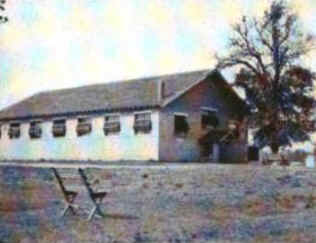
" And what's this?" said J. W., as they
passed a long, low, neat building, evidently new.
" That?" said the guide. "That's our
refectory. " We've had it only about a year. We used to be obliged
to do our cooking in the basement of the dormitories, and to eat down
there too. It kept the whole building smelling of food all the time, and
it wasn't a very good place to eat, anyway. Now we feed all of the
students in here at one time. We have space for six hundred at the
tables. We have a large, well- equipped kitchen, and the arrangement is
very much better in every way. Some of the pupils help at meal time, and
they pay for their board that way."
"And here's an athletic field, too, I see,"
said J. W., "with bleachers and everything."
"Yes, we make a good deal of athletics,"
said the dean. "The boys will soon be out here playing baseball
now. We have football and basketball too."
As they walked back across the campus the dean
pointed out a number of comfortable homes near the school grounds, where
former graduates were living, and he briefly told J. W. of some of their
successes in the field of business and elsewhere.
" Who lives in this house ?" said J. W. as they passed
a beautiful white house on the campus.
" That's the president's home," said the dean.
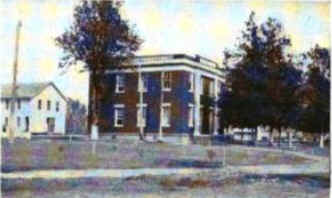
" And what's this?" exclaimed J. W., as they suddenly
came upon what was in its outer aspect the most beautiful building they
had yet seen.
" I've been saving this to the last on purpose," said
the dean. "This is our Carnegie Library. Ours is one of the
relatively few Negro schools to which Andrew Carnegie saw fit to give a
library. At present we are using the upper floor as a chapel. Our chapel
burned some time ago, and we very much need another. The upper floor of
this building is the only place we have that is big enough to hold all
our pupils. We are getting along quite well that way, as a temporary
measure, but we must have a new chapel as soon as possible."
When they were back once more in the dean's office J. W. said:
"The school is wonderful, in its way. But I am even more interested
in folks. I wish you would tell me about yourself."
" I am afraid there isn't much of interest to tell,"
said the dean. "I was born almost within stone's throw of this
campus. My father was a Methodist minister, and so, of course, we moved
around more or less. I got most of my education right here in Marshall.
I graduated from the college here a few years ago and then studied at
Harvard University, specializing in education. For two years I acted as
a sort of assistant to the president here, and when the dean was elected
president of another school, I was made dean. Some people told the
president that I was too young for so much responsibility, but he seemed
to think I was the man for the job. I certainly enjoy it. This is a
great school, but the president and I have some ideas for making it even
better than it is now."
|
|
" I don't mind telling you," said J. W.,
"that the last few hours to me have been full of surprises. I
didn't expect to find any such school as this down here. Are the other
schools of the Board of Education for Negroes anything like this ?"
" Well, I have visited only a few of them,"
said the dean. "Of course we like to think of our school as the
best one of the lot. Three of the schools on the Board's list are
professional schools, and different on that account. Then there are
several which do not give any college work. Clark University at Atlanta,
Georgia, is supposed to be one of the leading schools. It has a large
campus and a wonderful new school building made possible by the
Centenary. Morgan College has recently been moved to a beautiful new
campus just outside of the city of Baltimore, and I understand that
Bennett College in North Carolina is being practically remade. Claflin
College too, in South Carolina, has had a wonderful development. Then
there's Rust College at Holly Springs, Mississippi, and Samuel Huston
College down here at Austin, Texas. They've all done fine work. It's
hard to make comparisons between them. They say that Haven Institute at
Meridian, Mississippi, has one of the finest campuses now. They got a
chance to purchase the entire outfit of a white girls' college at a very
modest price. They have a big farm, some large and beautiful buildings,
and, I am told, nearly forty pianos. They are making quite a specialty
of music, and also of their Business Department. They have a swimming
pool, running water in every dormitory room, and some other unique
features.
" In one respect, however," the dean
continued, "we excel all the schools, I believe."
" What's that?" asked J. W.
" I think we have the largest College Department
of any of the schools. This year we have one hundred and twenty-five in
that department."
" How do you account for that?" said J. W.
"Is it because Texas is such a big State?"
" Well, Texas is a big State, all right,"
laughed the dean, "as big as all the Atlantic States from Maine to
Virginia inclusive. And we get a good many students from other States
too. But the size of Texas doesn't account for our College Department.
It's partly because we have quite a number of high schools for Negroes
in this part of the country. You know in some Southern States there are
almost no public high schools for colored pupils at all. That makes it
hard for colleges to do regular college work. There's no way for them to
get prepared pupils."
" What are your departments besides your College
Department ?" asked J. W.
" In addition to our College of Arts and
Sciences we have a Preparatory School, a Normal School, a Grammar
School, a Commercial School, and a Music School. We also give a special
pre-medical course for those who are planning to study medicine."
" It seems to me that you're doing pretty well
here now," said J. W., "but I suppose you have what the
Centenary people call 'unmet needs.' What do you need most at
present?"
" I'm not sure what the president would
say," answered the dean, "but I would say, as I think he would
too, endowment. We desperately need endowment. We've got a pretty good
equipment, and a fine student body, and this school can become a great
and permanent power if its future can be insured by endowment. At
present we live from hand to mouth, and it's a rather precarious
existence. " By the way," he continued, "there is one
thing I forgot to mention. We now have our school year divided into four
quarters, so that the school is in operation practically the year
around. Pupils are admitted at the beginning of any quarter. You see the
summer is a pretty good time for school down here in this cotton
country. After the crop is 'laid by' there isn't so much to do while
it's growing. Then every summer we have a summer school for
public-school teachers here. During those weeks we have two fully
organized schools in operation at the same time. Every spring, too, the
Board of Home Missions and Church Extension holds a school for colored
rural pastors here. Oh, we keep busy enough."
" I'm so interested in what you have been saying
that I could listen for a long time," said J. W., "but I must
be going. I have already taken up 'most all of your afternoon."
" It's been a pleasure for me," said the
dean. "If you ever chance to be in town again, be sure to come out
and see us. The next time the president will probably be here, and out
of his long experience he can tell you many things which I do not
know."
The evening train which J. W. at first had intended
to take had left long before he returned to his hotel, but that was a
matter of minor concern. He would lose no time thereby. It merely meant
getting up early the next morning. He felt, however, that his
intellectual stature had increased about an inch that afternoon, and he
could afford to get up early for a good many mornings rather than to
have missed the opportunity which he had just enjoyed. He had something
to take home to Pastor Drury, and he imagined that he had learned a few
facts with which even that good man, usually so well informed, was
unfamiliar.
Sketch from J.W. Thinks Black by Jay Samuel Stowell - 1922 -
Image1: The Carnegie Library
Image2: The Refectory
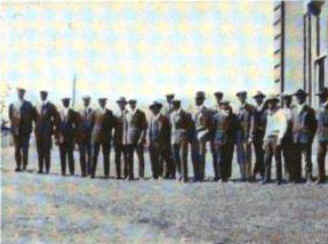
Image3: A Group of Students Who Served in the World War