Historically Black College
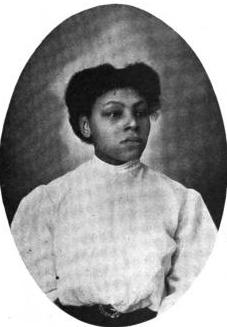
1909
CHRISTIAN ASPECTS OF MODERN EDUCATION
By Belle Roy Tillotson College Austin Texas
[The following is the contribution of a pupil in the English department of Tillotson College Texas If any white pupils in the eleventh grade can do better than this in thought and its expression we will be glad to receive their articles There is good quality at Tillotson.]
THE thing that most impresses me as I think of our schools and colleges to day is the way in which they conform in spirit and in method to the teaching of Jesus Christ. So true does this seem to be that I think it must without hesitation be affirmed that any student to day in his school or college is true to Christ that in obeying the best ideals that he finds operative in them he is obeying Him so completely has Christ dominated the spirit and shaped the methods of our modern educational life.
Any teacher who is living up to the ideals of his profession understands perfectly well that his real business is not to teach a lesson but to teach the lesson it is not a question of teaching something so much as of teaching the thing all the subject matter is simply an illustration of the matter. It makes no difference where you turn in the social world to day we find the teacher's business defined in terms of character and that end is to be attained only by creating the persuasion that the order in which we live is the spiritual order that the individual is bound to recognize and to obey the divine life of the midst of which we live and move and have our being." The means by which that conviction is to be created may be different but by all means it is to be attained.
A student in college who is true to the educational ideal, understands that what he gets out of his college life is something more than learning or information; that what he really receives is a largeness of life which may be more easily felt than defined. If he has been true to this element of college life he has that freedom from provincialism and prejudice, that aptness of mind and largeness of outlook which make one in the best sense a citizen of the world. It is education thus conceived that helps men to see the high meaning of the commonplace in every opportunity of life. Men and women so educated throw into their work that great interest and sacrifice for which no money can pay. It is education so understood which gives to life its steady, persistent, intelligent, courageous purpose.
If there is one ideal of education on which all true educators and all true teachers insist, it is surely this, that the type of character which a true education seeks to produce is one that is capable, trained to take its place in our social order; which is prepared not to live for itself alone, but to live for the world in which it finds itself. The kind of virtue which a true education is seeking is not negative virtue only; not merely a keeping of itself "unspotted from the world;" but a virtue which is positive, which is willing to bear its share of the world's burden and eager to do its share of the world's work.
We are pleased to see that Mr. RuFus Monroe Meroney, a graduate of Tillotson College, in Austin, who received there his impulse and desire for a larger education, was graduated with very high honors at Yale University, class of 1909, among the choice scholars of the class. We are further gratified to see that among the honors in special studies Mr. Meroney took the highest honor in English, language and literature. The subject of his thesis was "A Theory of Poetry." Mr. Meroney wrote a year ago to Tillotson: "The chimes on our dear Battell chapel ring out each quarter hour here, night and day, and I have often thought that the silver tones of those sweet bells will probably resound in my heart for the rest of my life. But often in my dreams rings too the Old bell at Allen Hall; the bell that called me so many a day to pleasant toil, so many a day to prayer and holy thought, the old bell that summoned me to the highest that was within me, that summoned me to duty and to God. "Among the fleeting visions of life which will appear before my eyes in the future hours of meditation and retrospection, I think the field of blue with the great white Y will be ever present, but the blue of Yale will be given a deeper and truer blue by the blue of Tillotson, and the borders will always be tinted with old gold.
God bless Tillotson!"
OBITUARY
The American Missionary Association and the colored people in the South have met with a great loss in the death of Rev. William J. Larkin, whose earthly life came to its close on Christmas day, 1908.
Mr. Larkin was a man of sterling qualities and noble Christian character. He was a forceful and inspiring preacher, a thorough Bible student, a clear and magnetic teacher and an able business manager. Of a strongly sympathetic nature, he was greatly beloved not only by the students, but widely by the colored people wherever he was known. We give in his own words a brief story of his service:
"I was born in Chatham, Kent, England, October 14, 1847. My father died when I was fourteen months old, leaving a widow and four children. Mother had to struggle hard for a living. One of the children died in infancy. My brother died at eighteen years, my only sister at twenty-four. My opportunities for education were meager, and I was not able to go beyond the academic course. I left home at fourteen years of age to fight my way in the world, being apprenticed in a dry goods business at Gravesend, Kent, in which business I remained until leaving England.
"I was converted when about eighteen years old and began my 'public ministry' unsent, in the open streets. A strong desire for missionary work lay heavily upon roe.
"During my early Christian life I spent much time on Sundays visiting a poorhouse, a ragged school and a Sunday-school, also a young men's prayer meeting, etc. As a clerk in a store, after leaving Gravesend, I went to London, thence to Norward, thence to Lewis, Sussex. After some years we moved to Devonshire, where I embarked in business for myself, during the eleven years there. With all the care and hard work of business, I found my work in preaching at the 'Gospel Hall' a joy of voluntary service, and so, for seven days in the week, I labored, being chargeable to no one. But
the time came when I had to choose to give up either preaching or business. The choice was not hard. I gave up the business, my wife being willing to trust what seemed to be the direct hand of the Lord. I felt the way was clearing for the desire of my heart, and my thoughts were directed to Africa; but, with five little children, it seemed impracticable. For twelve months we prayed and waited, when my wife consented to come with me to 'Africa in America,' and, having sold our house and home, we left, at our own charge, October, 1889, for Selma, Alabama, simply trusting for guidance, as strangers in a strange land.
"In December, 1889, Dr. Beard, of the American Missionary Association, met me in Selma and asked me to go to Marion Congregational Church, colored, to preach a few weeks, leaving my family strangers in Selma. The few weeks extended to October, 1890, when I was commissioned to take charge of the First and Second Churches at McLeansville, N. C. Before the year of service was over, the Marion people asked for my return to them as their pastor. I was sent back and remained about five years; it was still my 'First Love' and work among the colored people, and to-day I turn back and think of the staunch and true friendships formed there. It was here that I was locked in jail for some hours for preaching to the Negro prisoners.
"From Marion I went to Tougaloo, Miss., and served as Treasurer, still finding fields for service in the wide district around. After eight years the strain of work compelled me to resign. Dr. Beard very kindly sent me to Tillotson, Texas, as Treasurer, whence, after two years, I was transferred, at my own request, to Beaufort, N. C., thence back to Tillotson, at the request of the President, where I remained till 1908, when my health compelled me to relinquish work."
Mr. Larkin sought relief in the far West, and was living in Salt Lake City when he died. He was indeed a good, true man.
FROM
TILLOTSON COLLEGE,
AUSTIN, TEXAS
Shortening our school session a little, that the time might correspond to your eastern time of meeting, we assembled in the Chapel, where Dr. Agard opened the exercises with a Bible selection and prayer. Your letter was read, and Dr. Agard called to the minds of those present that praying for the success of the American Missionary Association was practically praying for their own success. He was followed by our pastor, who gave a clear sketch of the history and far-reaching results of the Association, and when the opportunity was given, several prayers were offered for the success of the Annual Meeting. Those who were too timid to pray in public showed the attitude of their minds in the sincerity with which they sang "Praise Him Lord of All," at the conclusion of the services.
The American missionary - 1909